Happy 2011, everyone, and welcome back to the LR Blog! We hope you had a joyous and healthy holiday. Here are a couple of updates to start off the New Year:
AWP 2011 – We’re Hosting a Reading!
Yes, the editors will be at the 2011 AWP conference in DC this year (Feb 3-5), and this time, we’re co-hosting a reading!
We are pleased to announce that we’ll be participating in an off-site joint reading with Boxcar Poetry Review. The event will take place on the Friday night, and will feature the work of contributors to both magazines. Here are the details:
Lantern Review & Boxcar Poetry Review Present: A Night of Poetry
Friday, February 4, 2011 at 7:30 PM
at Go Mama Go!
1809 14th St. NW
Washington, DC
(Metro: U St/African-Amer Civil War Memorial/Cardozo)
Pay As You Wish ($5 suggested donation; no one will be turned away).
If you live in the D.C. area or will be there for the conference, we hope that you’ll consider stopping by. If you haven’t already, please take a moment to RSVP at our Facebook Event Page. We’ll be sharing more details about the reading and about our other plans for AWP as the time of the conference approaches.
Coming Soon: Issue 2
Issue 2 of Lantern Review is currently in the production and layout stage. We are extremely excited to be able to present what we feel is a tighter, more focused body of work this time around. A sneak peek of some things you can expect to see: a Community Voices feature on Sulu DC (with a secret, surprise element), lots more visual art than in Issue 1, and of course, plenty of wonderful poetry. Our goal is to have the issue out in time for AWP, so keep your eyes peeled in the next couple of weeks!
As of December 24th, the LR blog staff is taking a little break for the winter holidays. We will be back from hiatus on January 18th, with more new content and fresh updates about the impending release of Issue 2. In the meanwhile, please accept our best wishes for a joyous holiday season and a happy and healthy New Year. See you in 2011!
Last year, we asked our staff writers to recommend books that they’d read in the last year and thought were worth passing on. This year, we’ve decided to continue with this tradition. In light of that, here are our holiday staff picks for 2010 (poetry, prose and more—yes, we read more than poetry!)
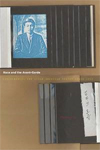
Recommended by Mia: “This is one of the key critical texts on my reading list for the holidays. I’ve only skimmed the first few chapters, but thus far have found Yu’s argument compelling, his analysis rigorous, and his wide-ranging knowledge of Asian American and Language poetry in the United States to be informative to my own work—not to mention useful in historicizing these two movements/moments in contemporary poetry!
From the Tinfish Editors’ Blog: ‘Using a definition of the avant-garde that has less to do with aesthetics than with social groups composed of like-minded artists, Yu argues that Asian American poetry and Language writing formed parallel movements in the 1970s. […] Both presented themselves in opposition to the mainstream; both were marked by questions of form and racial identity. Both meant to create art out of social groups, and reconstitute the social through the reception of their art.'”
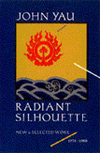
Recommended by Mia: “Yau is one of the two major poets that Timothy Yu addresses in Race and the Avant-Garde (Theresa Hak Kyung Cha is the other), so I’ve been reading through his New & Selected Work for an introduction to the thematic and aesthetic scope of his early career. He’s a fascinating figure in Asian American poetry and, as Yu points out, ‘might best be read as a restoration of the links between politics, form, and race that characterize the avant-garde Asian American poetry of the 1970s [… providing] the first opportunity for most readers to recognize […] the presence of that avant-garde back into the very origins of Asian American writing.'”
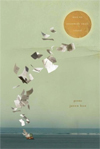
Recommended by Iris: “Jason Koo’s style is very different from my own, but this book (his first collection) managed to completely charm me with its quirkiness. The voice of the book’s primary speaker manifests a world-weary exhaustion that is, on the surface, darkly melancholic and painfully self-deprecating. He obsesses over his dirty apartment while eating a tuna sandwich, dreams about floundering clumsily through an encounter with Lucy Liu, envisions himself stranded on an island in the middle of an ocean, worrying about the size of his nose. But beneath the speaker’s (at times endearingly hyperbolic) self-consciousness lies a striking vulnerability and a luminous ability to evoke the fantastic within the mundane: BBQ chip crumbs echo the ‘fine grains / of my slovenliness,’ becoming ‘barbecue pollen,’ and later, ‘orange microbes’ (9); Lucy Liu becomes a motherly goddess figure who guides him through a secret mission, ‘pulling you after her diving into the stage,’ which becomes the arena for an undersea showdown complete with battleships, lingerie models, and harpoons (22) , the island transforms into the kneecap of a giant woman who ‘has no nose. Just a space where mine / can fit’ (77). Part Frank O’Hara, part tragic hero of his own sardonic comic-book series, the speaker’s sense of humor, whimsy, and wonder, as transmitted by Koo’s craft, paint a picture of a world that reinvisions the now-archetypal image behind John Donne’s famous ‘No man is an island’ with simultaneous irreverence and tenderness. ”
Fixings for hot pot: a family holiday tradition that characterized my last return to New Jersey.
The approach of the holiday season always makes my thoughts turn towards home—regardless of whether or not (and where) I’ll be traveling—and makes me revisit my relationship to the process of returning to its streets and idiosyncratic landmarks. The buses and shuttles and planes and cars I’d take to get there. The things I’d see and do when I did. Home is, to some degree, Philadelphia, where Mayor Nutter’s face greets me as I descend the airport escalator, and where I can lope off to Chinatown for the world’s best bao (K.C.’s) or a steaming bowl of broth swimming with fishballs and silky ho fun (Ting Wong). But it is, more quintessentially, my parents’ quiet hometown in New Jersey, where suburbia swells out over the fences, becoming more pale and alien each time I blink, but where, in my family’s house, there’s always a kitchen light on and a steaming hot bowl of fresh chicken soup waiting for me whenever I return, suitcase in hand.
Today’s prompt is based on an exercise that Bruce Snider, one of my undergraduate mentors, used to use in his workshop classes.
Prompt: Think of a city, town, or other geographical location that you know intimately, and write its portrait, in the form of a poem that details a specific return to that place.
A bicyclist pauses at an intersection in New York City while a sea of yellow taxicabs moves around him.
I’ve always found that one of the occasions on which I am best able to write is when I’m traveling. I don’t drive, and so whenever I need to go somewhere that is too far away to be reached by bike, I ride all sorts of buses, trains, planes, shuttles, trams, taxis, and other forms of mass transit in order to reach my destination. There is something uniquely meditative about these trips: despite the fact that I am usually surrounded by—even crushed in against—other passengers, the motion and sound of the vehicle and the relative anonymity of being amidst a crowd of strangers provide me with excellent opportunities to listen, observe, and record.
In Oliver de la Paz’s poem “Aubade with a Thistle Bush Holding Six Songs,” the speaker engages with the sensory aspects of his experience on a train in order to contextualize a portrait of a fellow passenger:
A man told me that he had wasted his life. I did not know him.
We were on a train moving from one trespass to the next,
the fields in the windows shifting utterly into daybreak.
As the poem progresses, we find that the train itself and the experience of traveling on it have become the primary device by which this portrait is rendered:
The rails below us were making comparisons
as if they were saying look at the thorn tree gone wild,
look at the gravel kicked on the ties.
I wondered about the hollow of the guitar and of the voice of the man.
It’s always like this on trains‹the burn of your ear
when a stranger speaks over the sun cutting through windows.
The speaker, who knows nothing about this man besides what he has heard and seen of him within the context of the train ride, finds that the sound of the train and the slant of the light through its windows merge into his vision of this stranger, until, by the end of the poem, the man is absorbed into the greater network of train trips and other journeys that form the speaker’s experience: he is, the speaker states, just one of many strangers “who’s asked me for an ear.” Like so many piece of luggage, some of those people’s stories have been remembered by the speaker, while others’ have been “left at the station.” Most, we imagine, have suffered the latter fate. But the speaker remembers this particular man’s story because of the way that his memory of it is mediated by his own experience of the train ride. What he recalls most vividly is not the content of the story itself, but the scene outside the window of the train as it was being told: the three birds that “blur by,” and the way that their flight fixed this particular stranger into the speaker’s memory, as if sticking his name “to a thistle.”
Prompt: Write a poem that uses the sensory experience of riding a particular form of transportation as a device by which to relate the story of a journey or trip that you’ve taken.
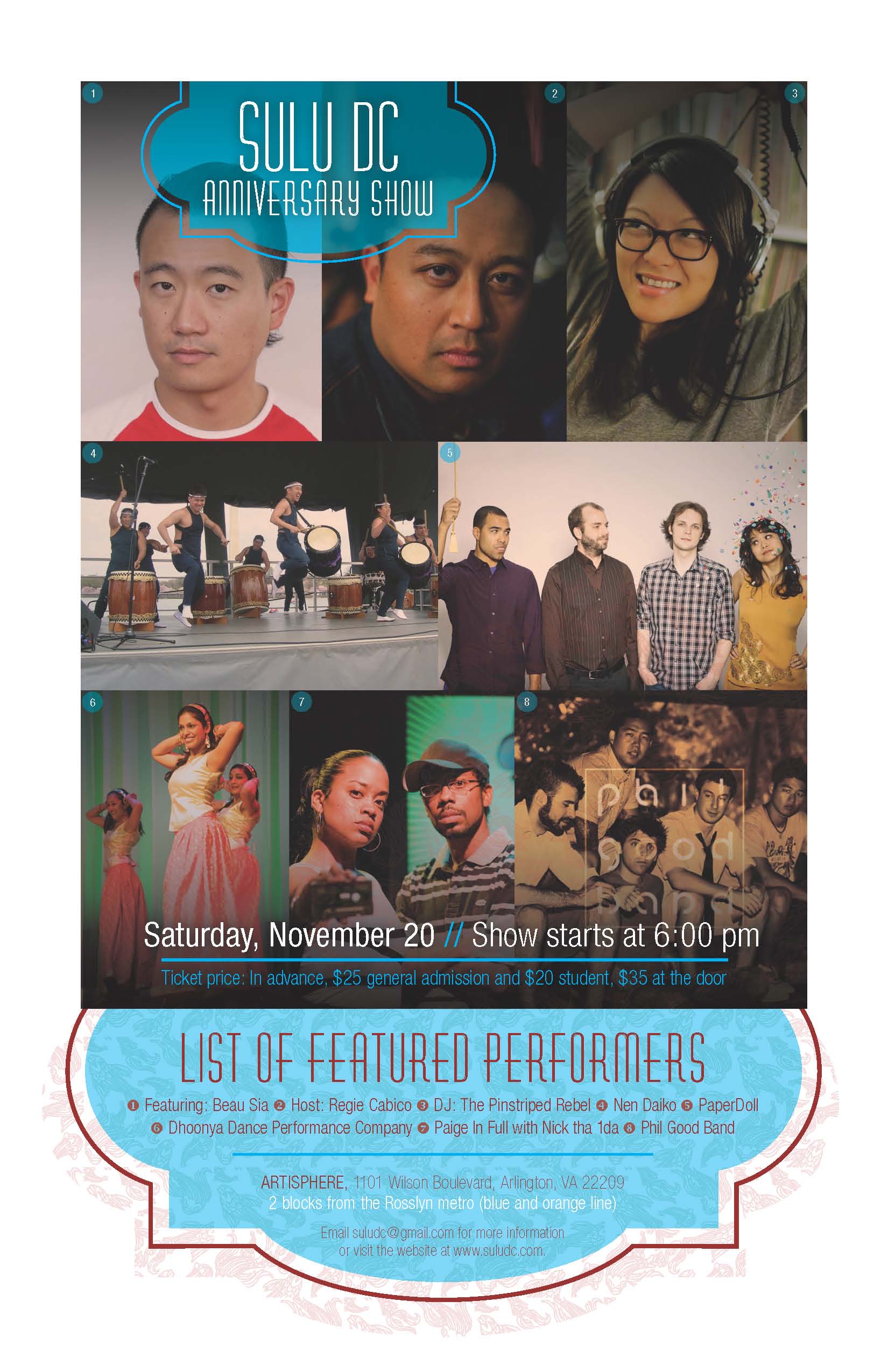
Sulu DC's 1st Anniversary Show (Click to enlarge the poster)
Our staff columnist, Simone, who is one of the organizers of the Sulu DC series, recently alerted us to the following very cool event:
On November 20th, Sulu DC will be celebrating their first year with a special anniversary show hosted by Kundiman faculty member Regie Cabico and featuring—among other music, dance, and poetry acts—a special performance by celebrity spoken word artist Beau Sia.
Here’s the dish on the event, as described in their official press materials:
On November 20th, under the Artisphere’s Dome Theatre—a new and innovative arts space in Arlington, VA—locally and nationally renowned AAPI performers will ignite the stage. From Bollywood flares to Taiko drums, spoken word to modern dance, comedians to rock bands, the Anniversary Show will surely entertain and inspire. Hosted by Regie Cabico with music by DJ The Pinstriped Rebel, the Anniversary Show will pay tribute to leaders who have significantly contributed to the local and regional AAPI community through art and arts education, and celebrate Sulu DC’s accomplishments. Additionally, ticket proceeds will provide scholarships for 5–7 Sulu DC representatives to participate in the Asian Pacific Islander American (APIA) Spoken Word & Poetry Summit in Minneapolis in 2011.
The Sulu DC 1st Anniversary Show will take place on Saturday, November 20th at 6 pm, at ARTISPHERE, 1101 Wilson Blvd, Arlington, VA 22209 (1 block from the Rosslyn Metro station; parking validated on site). Tickets, which can be purchased in advance by following these instructions (scroll down to the bottom of the page to find them), include the price of food and drink, and cost $25 for Advance Purchase Online (www.suludc.com) or $20 for Student with valid ID (or LiveGreen members). Tickets will also be sold at the door for $35.
If you live in the DC area, we definitely encourage you to go and check out this landmark show. As Simone has reminded us, tickets can sell out fast—so reserve yours soon.
Happy Birthday, Sulu DC, and congratulations on a successful first year!
A year ago today, we began our adventure here at the LR Blog with a little introductory post, in which we wrote:
Thank you for all of your support and patience [as] we continue to build LR piece by piece. We look forward to carrying on more conversations with you in the weeks and months to come.
Today, that sentiment still remains true. We are still so grateful to you, our readers, contributors, and supporters: to everyone who’s ever read an LR post or browsed our first issue, who’s ever submitted their work, who’s ever linked to or responded to our content, Tweeted about us (or retweeted something we’ve posted), shared our posts on Facebook, patiently waited through one of our many deadline extensions or extended hiatuses, helped to spread the word about us, encouraged us with kind words, offered us advice, volunteered to assist us, given us a shoutout at a reading, agreed to pass out our materials alongside their own . . . thank you. Without you, LR would not have been able to grow and thrive. We have loved every bit of the conversations in which we’ve engaged with you during these last 12 months, and look forward to many more, and ever more interesting, dialogues with you in the months and years to come.
If you’d like to help us celebrate today, we’ll be Tweeting little flashbacks to posts from our first year throughout the day. To follow along, look us up on Twitter (@LanternReview) and search for the hashtag #LRAnniversary.
Our humblest thanks, once again, for all of your continued encouragement and support. Truly, we feel very, very blessed.
Image from Kristine Uyeda's postcard poem, "Red Riding Hood" (published in Issue 1 of LR)
This week’s prompt was largely inspired by the beautiful Kundiman postcard poems that we had the privilege of publishing in our first issue. Writing postcard poems can be a lovely exercise in multiple respects. They are, by nature, short, which is a challenge in and of itself. Furthermore, they are handwritten, and in some cases, hand-illustrated, too. The detail and attention that drafting them requires can add a dimension of intimacy to the finished product. Additionally, the fact that they are necessarily one-of-a-kind means that each postcard poem becomes a little one-off publication unto itself, and the card’s fragility and vulnerability to things like fingers and rain as it travels through the mail means that the piece that is received on the other end is always inscribed with a physical history of travel and transfer from hand-to-hand-to-hand. The exchange of postcard poems , furthermore, can be an excellent way to build community, inviting collaboration, response, and the incorporation of poetry on a micro-scale into the everyday correspondence of those who participate.
Experienced poets may find it satisfying enough to challenge themselves with the tiny spatial confines of a postcard, but I have also included a variation below that I’ve tried in the community/classroom setting with some success.
Prompt:
Create or find a postcard whose subject interests you (non-geographically specific subjects tend to work quite well). Decide upon a persona, or voice, and an addressee. From what space, place, or position is that postcard being written? How might this sense of positionality affect the speaker’s attitude towards the addressee, and thereby, the tone of his or her address? Write an epistolary poem on the back of the postcard, using the small rectangular writing space to shape your poem’s form.
Classroom Variation (“Wish You Were Here”):
Write a poem in the form of a postcard from an unusual location. When I’ve done this exercise with small groups in the past, I’ve come prepared with a handful of blank notecards on which strange, mundane, wacky , and/or otherwise non-geographical ‘locations’ have been pre-written (e.g. “The Bridge of George Washington’s Nose,” “The Back of the Refrigerator,” “The Library Dumpster,” “The Bee’s Knees,” “Inside Harry Potter’s Shoe,” “The Kitchen Table,” etc.). On the back side of each card, I’ll draw or print a “postcard” template (complete with spaces for mailing address and stamp, should the students decide to mail off their completed pieces). After introducing the concept of epistolary poems to the students and giving them a few examples, I allow them to choose a “postcard” featuring a location that interests them. The students are then given the chance to try writing a postcard poem on the back sides of their chosen cards. For younger or more artistically-inclined groups, adding an illustration on the blank front side of the card can also be fun.
There’s just a few more weeks to send in your submissions for Issue 2! Don’t forget to glance over our revised guidelines. To get a feel of what we’re looking for, we suggest you take a read through Issue 1. You can find our submissions page here.
Where is Editors’ Picks? What happened to the Community Calendar?
Our Editors’ Picks column and the Community Calendar are on temporary hiatus, while we figure out a way to make maintaining them more sustainable for our two-woman editorial team. LR is slowly growing, and this fall has been a period of major transition for both of us, but we have been really grateful for our expanded blogging team, and are hopeful for the future. Thank you so much for your continued support; we deeply appreciate your patience.
I have been discussing some of Susan Sontag’s thoughts on photography with the students in my First Year Composition classes lately, and her comments about the way that photographic images fragment our modern sense of reality have made me think about how the same ideas might apply to poetry. Though our sense of the “real” in reading a poem is more diffused than the expectation of strict verisimilitude that we have in looking at photographs, a poem can, in some way, still be thought of as a lens or a frame through which we are given a curated glimpse into an event, thought, or world.